
Documents Needed to Sell Land in Nevada

A useful Nevada closing file explains who owns the interest, what is being transferred, what the parties agreed and how settlement will be completed. No universal download can answer every question. Start with the records already available, then ask the closing provider or qualified counsel what the actual circumstances require. This guide provides general legal information rather than advice for a particular transfer.
Start With the Property Deed and Signing Authority
Locate the recorded instrument through which the current interest was acquired. A tax bill or online map may help identify a holding, but neither alone proves you own the property or establishes who can convey it. A buyer needs to know that the seller has the authority required for the proposed transaction. Explain any estate, trust, entity or shared-ownership arrangement early.
A deed is a document with legal consequences, not simply a convenient address label. Ask the appropriate professional to interpret unfamiliar provisions and identify what further evidence is required. An old title deed can belong in the file without answering every current ownership question. Do not assume that possession, a family understanding or years of paying expenses resolves a missing authority instrument.
The Nevada provisions on conveyances are an official starting point for legal context. They do not identify the correct instrument for your individual facts. Qualified review is particularly important when the seller's interest is limited, disputed or held through an arrangement that requires another person's approval.
Match the Legal Description to the Intended Interest
Check the APN against the legal description of the property and the recorded acquisition instrument. A mailing city, fence line or map pin is not a substitute. A buyer and owner should be discussing the same tract before a price is accepted. If adjoining holdings are involved, identify which are included rather than relying on a general family or ranch name.
A boundary survey can address physical boundary questions that a record search does not settle. Ask a qualified surveyor whether an updated land survey is appropriate instead of assuming every transfer requires one or that none ever does. The purpose is to understand the actual uncertainty. Do not portray an informational online outline as a professional determination merely because it looks precise on screen.
For location context, the Esmeralda County guide discusses townsite and remote-acreage records. The Lovelock guide distinguishes valley use from surrounding acreage. These resources can help organize questions without establishing a particular boundary or title result for the buyer.
Read the Purchase Agreement as a Set of Obligations
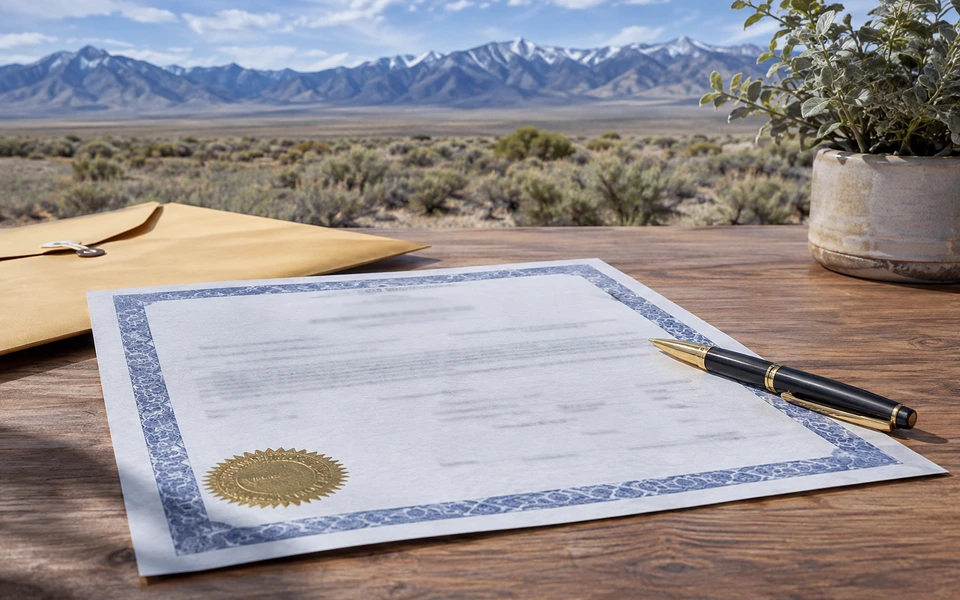
A real estate purchase agreement should identify the parties, interest, purchase price, deposit instructions, important dates and conditions. Ask about investigation rights, assignment, expenses, default and cancellation. An agreement template may provide a starting format without fitting the actual circumstances. The buyer's preferred form is not automatically independent protection for the seller.
A land purchase agreement is different from the final conveyance instrument. The former establishes obligations; the later documents carry out the transfer. A land sale contract should make the sequence understandable. If someone uses the label land contract, ask what payment and transfer arrangement they mean rather than assuming the phrase always describes the same structure.
Put clarifications into the signed agreement instead of relying on informal messages that conflict with it. A purchase and sale agreement can allocate expenses differently from an earlier advertisement. The buyer and owner should understand how a condition can be satisfied, extended or waived. A verbal assurance that a provision is standard does not explain its consequences.

Use Professional Review to Understand Recorded Interests
Ask the settlement provider what title work is included and which exceptions or requirements remain. A warranty deed is not a substitute for understanding the interest being conveyed. An easement, lien, restriction or unresolved estate instrument may affect the transaction even if the buyer is comfortable with the physical site.
A real estate attorney can explain obligations and options when a question goes beyond routine processing. A real estate agent may coordinate a different set of tasks. Confirm who represents whom and what the engagement covers. Legal advice should come from the appropriate professional, not be inferred from a purchaser's confidence or a downloaded checklist.
Explain known disputes and provide documents related to access or existing use. Do not summarize an uncertain matter as resolved merely to keep a closing date. A legal document with an unclear effect deserves interpretation before it is treated as proof. Selling land efficiently begins with accurate disclosure of what the file actually contains.

Reconcile Payoffs, Charges and Net Proceeds
Gather current statements for known loans, county balances, association charges and other obligations. The settlement provider can explain how verified payoff amounts and agreed expenses appear on the statement. The sale price is not necessarily the amount delivered to the owner. A buyer's promise about fees should match the written allocation, not merely the wording of a promotional message.
Ask which balances require direct confirmation and how any disputed item will be handled. Do not assume an old statement is current or send sensitive account details through an ordinary initial inquiry. The seller can organize useful information while allowing the closing professional to obtain the necessary confirmations through an appropriate channel.
If you need to sell under a tight deadline, identify these tasks at the beginning. A straightforward file may close in as little as 2 weeks, but missing payoffs or an unresolved instrument can extend the schedule. The transaction should follow verified information rather than a date chosen before the work was understood.
Prepare the Transfer Instrument and Recording File
The buyer and owner should confirm the vesting, description and signing requirements with the professional preparing the instruments. Do not choose a conveyance form solely because its filename sounds familiar. The correct approach depends on the rights and commitments involved. Review the draft before signatures are arranged so errors can be addressed while the parties are available.
The Nevada transfer-tax overview explains the Declaration of Value and county-recorder collection process. Ask the closing provider which assessment, exemption evidence and recording standards apply. A claim that an exemption should be available is not the same as a completed, supportable filing.
Keep the deed draft, required supporting records and settlement instructions together. A buyer should understand when possession changes and what confirms completion. The final conveyance moves an interest from the seller to the buyer; it does not automatically settle a separate dispute or erase an obligation that the agreement says survives.
Plan Identification and Remote Signatures Early
An out-of-state property owner should ask about identification, notarization, delivery and available signing arrangements before scheduling travel. Do not assume every method is accepted for every instrument. The settlement provider can explain its procedures and the relevant recording requirements. Each authorized signer needs enough time to complete the correct steps.
Independently verify the closing contact and any payment instructions. A last-minute email changing account details deserves a separate check through an established channel. The buyer may also receive verification instructions, but that does not remove the owner's responsibility to question inconsistent information. Digital convenience should not replace an understandable record of approval and completion.
Retain the Closing Documents and Reporting Evidence
Keep the signed agreement, final statement, recorded deed information and relevant acquisition records. Ask which documents you need for later reporting or to explain the transfer. Do not discard the original file simply because settlement is complete. A future question may concern the earlier basis, an expense or the particular interest that changed hands.
Selling vacant land can involve fewer occupancy issues than a home, but it still transfers real property. Ownership of the property and possession of the property are related questions that should not be left implicit. A buyer and owner benefit from a final file that explains each. Ask the professional handling settlement what confirmation will be supplied when recording is finished.
Which Documents Do I Need for This Transfer?
Ask the closing provider for a list of documents tied to your circumstances, not a promise that every standard form applies. The key documents should connect the recorded interest, authority and agreed obligations. An important document can be easy to overlook when several people assume someone else has supplied it.
For a sale by owner, identify the essential documents and the person responsible for each. A real estate lawyer can explain legal issues about title to the property or the terms of the sale. The future new owner should receive the interest described in the contract, not a different set of property rights inferred from an advertisement.
If you are looking to sell land without a listing agent, confirm how the required documents will be coordinated. Being ready to sell means understanding what remains missing. Many documents can appear in the folder, but volume alone does not establish a complete file. Before you sell the property, ask how the documents involved connect to the actual transaction and what confirmation will show that the process of selling is finished.
Ask What Is Still Needed Before You Commit
The records needed to sell your land depend on its actual history and proposed terms. Ask which necessary documents are missing, who obtains them and what could delay completion. A checklist cannot prove that every issue has been resolved. If you want to sell your land through this inquiry service, information may be shared or sold to independent purchasers, and no offer or purchase is guaranteed.
Before signing, make sure the parties, interest, amount and conditions match your understanding. This is particularly important if you sell land by owner and coordinate more of the communications yourself. Choose professional support where the questions require it, then retain the finished file. A well-documented sale process is more valuable than a collection of forms that no one has connected to the actual holding.
Practical Seller Guides
Explore records, selling choices and closing questions before accepting terms.
Compare Your Own Options
Use accurate records and ask for written terms. There is no obligation to accept.
Request Your No-Obligation Cash Offer
Start with acreage, state, property address and county. Your contact and property information may be shared or sold to independent buyers who can contact you about an offer. Please read our Privacy Policy before submitting. No purchase or response time is guaranteed.